Birkan Kayadibi talks about the RGB Protocol Ecosystem
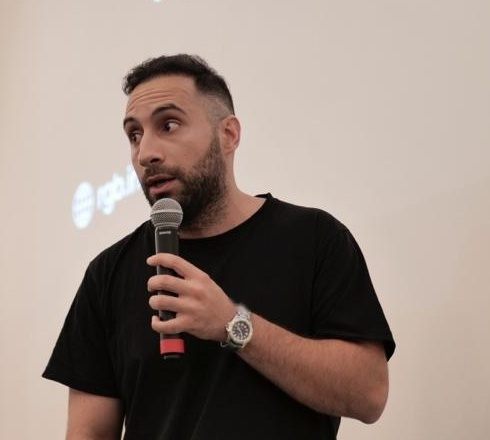
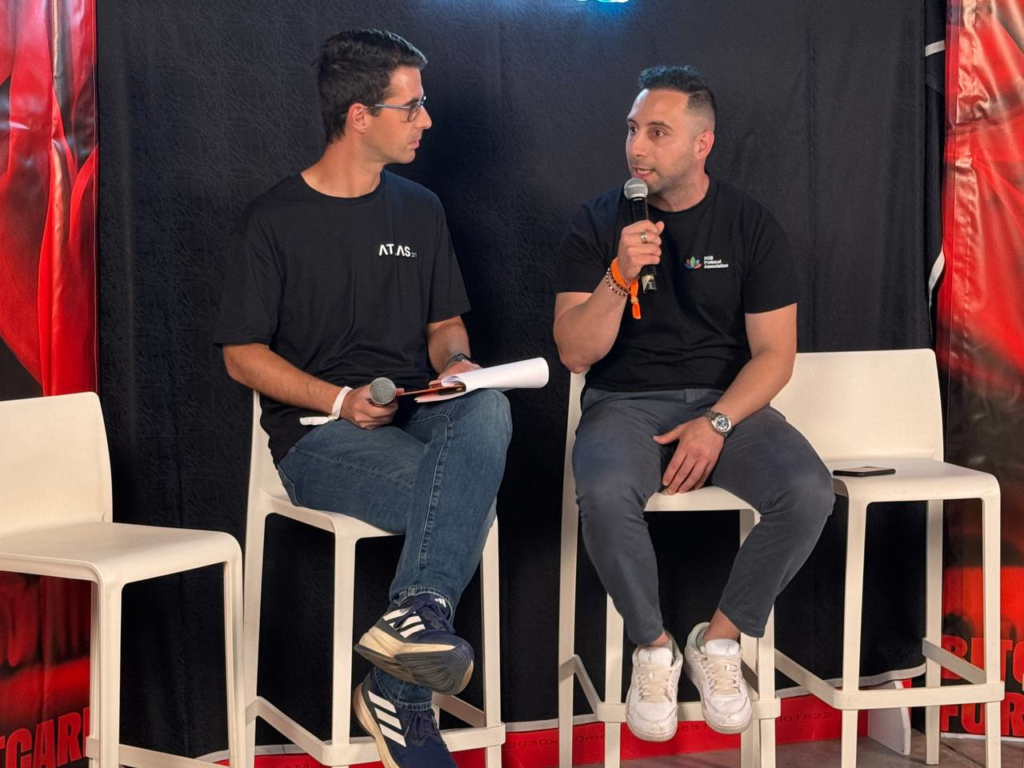
This interview was recorded live by Federico Rivi of Atlas21 at the Bitcare Forum 2026 in Brescia, Italy, on May 23rd, 2026. Birkan Kayadibi is Chief Operating Officer of the RGB Protocol Association, the non-profit organization supporting RGB Protocol on Bitcoin v0.11.1.
In Brief
- The RGB Protocol Association is a non-profit in Lugano, Switzerland that coordinates funding and education..
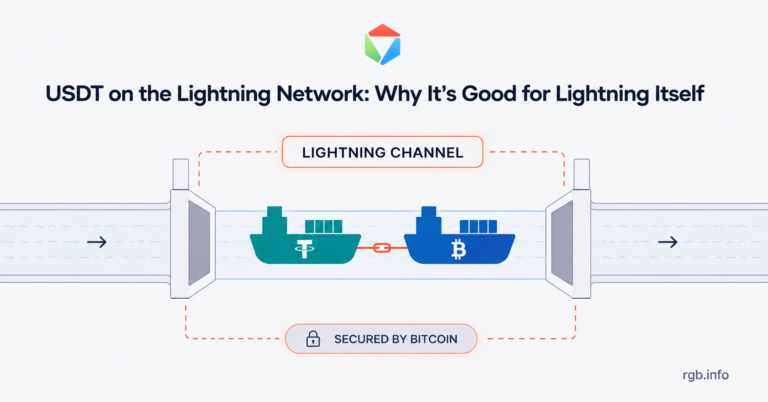
- RGB issues and moves assets like USDT on Bitcoin without sidechains or federations, keeping asset data off-chain.
- Birkan calls RGB a “meta-standard” for moving the same asset across Lightning, Liquid, Ark, and other Bitcoin layers.
- In 2025 the Association supported the shipping of RGB Protocol on Bitcoin v0.11.1.
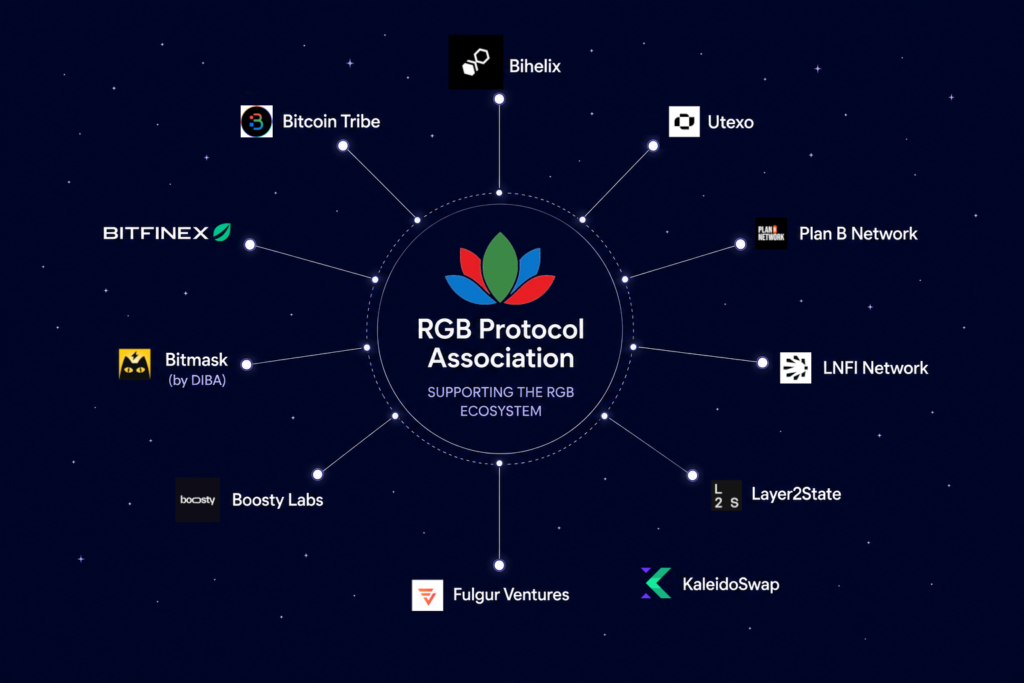
- Ecosystem builders include KaleidoSwap, Utexo, LNFI Network, and BitMask; backers include Bitfinex, Fulgur Ventures, and Layer2State.
What Is the RGB Protocol Association?
The RGB Protocol Association is a non-profit entity based in Lugano, Switzerland. We don’t do token-style or DAO governance, the way people sometimes assume. We’re an institutional support body, and we fund specific projects, handle education, and coordinate work across the RGB Protocol on Bitcoin ecosystem.
We’re vertical in RGB, but we also cover everything that touches Lightning, because we believe it is a common language across every protocol built on Bitcoin: to us, RGB and Lightning aren’t separate things. We mainly do education and coordination, and our goal is to solve the problems that come up in open source.
Open source is great, but sometimes centralization means efficiency. That said, we’re not trying to centralize anything, but we do try to give the ecosystem an organizational structure: coordinating teams and the community better, building out the ecosystem, and directing resources toward the projects where they matter most.
Why Build RGB If We Already Have Bitcoin and Lightning?
Paolo Ardoino was actually right over there while we were talking. What the market is telling us about assets in general is pretty simple: if you look at USDT, there’s enormous demand for it. Bitcoin, by design, prioritized security and decentralization, while scalability was always meant to come later. As a consequence, due to this trade-off we had to give up a lot in terms of asset deployment. Lightning helps facing the problem, but it has limits related to channel management, UX, and liquidity.
With RGB, once USDT is committed and Tether issues it as a stablecoin on Bitcoin, we expect a real amount of volume and liquidity that benefits the whole ecosystem, and Bitcoin in particular. As Federico Tenga and Giacomo Zucco said at the Tuscany Lightning Summit 2026, Bitcoin today has several layer-2 protocols beyond Lightning like Cashu, Ark, and others. Each of them has different trade-offs, and all of them in some way propose their own way of doing assets.
RGB’s role is more flexible: it sits almost on top of all of them, in a complementary way. It’s more close to a meta-asset standard for transferring an asset from one protocol to another, rather than a layer above them for building new things.
Once you’ve issued your asset, you can move it instantly over Lightning; alternatively, you can switch to a more federated setup and use Liquid; or you can use primitives to build something like an asset with introspection on Ark. The nice part about RGB is that you can use the same asset while switching between protocols. Lightning gets described as a kind of bridge, a common language between protocols built on top of Bitcoin, and RGB can play a similar role specifically for moving assets, like USDT, between an Ark wallet, a federated wallet, and a Liquid wallet.
What Happened with RGB’s 2025 Reorganization?
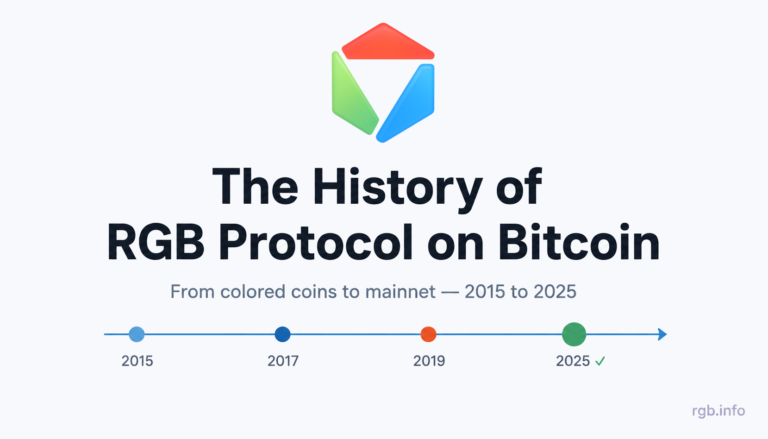
RGB has a long history. Development started with Peter Todd, then Giacomo Zucco got involved early on. What happened more recently is best described as a reorganization of the repository. The nice thing about RGB, and about Bitcoin in general, is that it’s open source. Anyone, whether in Uganda, Sweden, or Japan, can contribute to the RGB codebase, because it’s open source code.
Last summer, there were some disagreements, and they came from pretty pragmatic reasons. As RGB had years of development behind it, one team wanted to finish and deliver what had already been built after years of work. Another team was proposing to rewrite the whole codebase from scratch, which, in software terms, would have pushed the delivery timeline out much further.
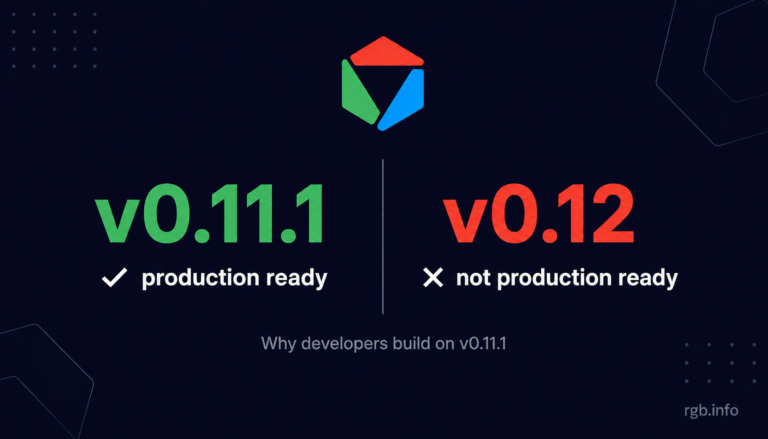
Our team was the first of those two. On our side, without excluding anyone, we made the call to finish what had been built, in order to respond to what stakeholders and the business side of the protocol actually needed. Open source is beautiful, but it’s only as good as the point where it connects with the business world. On the side, there are also stakeholders and investors who put money to push the protocol’s development forward. So there’s also a responsibility to meet the needs of those people and organizations. Our position was simply to finish the work and use that finished version as a baseline to keep developing from there, which is what became RGB Protocol on Bitcoin v0.11.1.
Being open source, anyone is free to create their own version, and it’s hard to stop a new fork from emerging. When teams are working with different stakeholders and different goals, it’s legitimate that different versions emerge, and the market ends up deciding which one gets used.
Note: RGB Protocol on Bitcoin (rgb.info, v0.11.1) is the production-ready protocol supported by the RGB Protocol Association. For the full story behind this reorganization, see the history of RGB Protocol on Bitcoin and why v0.11.1.
When Is USDT Launching on RGB?
At the Plan ₿ Forum in El Salvador, Tether announced their plans to deploy USDT on Taproot Assets, a competing protocol. Later, they announced the intention to also deploy USDT on RGB. On timing, the developer teams are working on it, and we’re confident that we’re getting close, but the honest answer is that when you depend on developers, it’s genuinely hard to give a firm date.
How Can Developers and Contributors Get Involved?
One of the Association’s goals is to build a real gathering point, not just for people who want to use RGB as an asset or a piece of technology, but also for talent, meaning anyone with a technical background who wants to contribute. By every measure the market gives us, RGB is one of the fastest-growing corners of the Bitcoin ecosystem, which also means more opportunities for new talent.
The best starting points: our website, rgbprotocol.org, the classic repo at github.com/rgb-protocol, and our education site, rgb.info. Giacomo Zucco himself has been involved with RGB since early in his Bitcoin career, so if you run into Giacomo, or Federico Tenga, or really anyone from the team, they’ll point you in the right direction.
Who’s Building the RGB Protocol Ecosystem?
The RGB Protocol Association is a non-profit, so we don’t have skin in the game ourselves. The ecosystem is mainly built by the startups developing on RGB.
KaleidoSwap is building a decentralized exchange on top of the Lightning Network that also uses Bitcoin. They don’t want to rely on centralized exchanges, so they’ll bring a solid solution on that front.
Utexo just closed a large fundraise, and they’re playing a big game: building payment infrastructure that combines Lightning and RGB to bring real liquidity into a given sector. They offer a B2B service, mainly built for businesses that need to receive large amounts of USDT.
Other teams include LNFI Network, another DEX, based in Singapore and strong in the Asian market, and BitMask.
On funding, we can mention Fulgur Ventures and Bitfinex, plus Layer2State, a fund that’s shown real interest in RGB lately. We’re genuinely happy about this last backing, since they like supporting freedom tech in general, RGB included.