Federico Tenga on RGB, Stablecoins, and Lightning
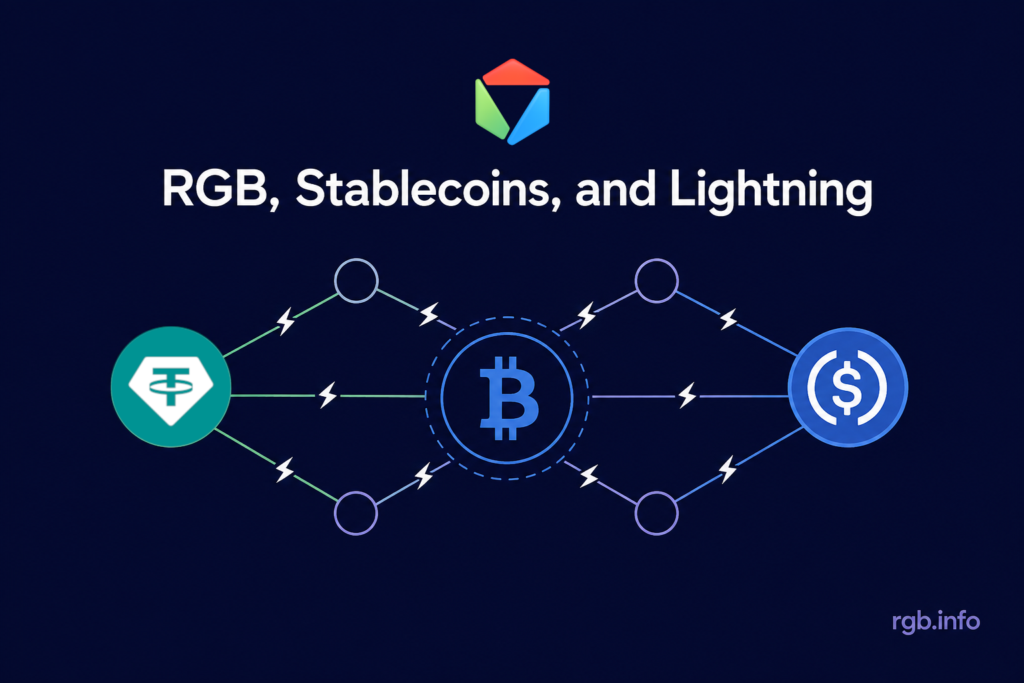
This clip is from an interview with Federico Tenga, co-founder of the RGB Protocol Association, recorded at the Tuscany Lightning Summit 2025 in Viareggio, Italy, where he covers topics like RGB, stablecoins, and Lightning. We believe it’s interesting to see the interview, to remember the state of development at the time. See Further Reading below for the current state of USDT on RGB and the RGB Protocol Association.
In Brief
- RGB development had become community-driven, spread across multiple independent companies rather than dependent on any single one
- The codebase was stabilized: the priority for the coming months was security and test coverage, not new features
- Stablecoins were seen as RGB’s strongest likely driver of adoption, alongside bitcoin and gambling as the industry’s main demand at the time
- RGB was designed for Lightning compatibility from the start — the Bitfinex team built an LDK-based RGB Lightning node supporting channels denominated in RGB assets
RGB Development Before Mainnet
By 2025, RGB development had become significantly more distributed, with more contributors and more companies working on the protocol. Federico Tenga considered this an important property for a healthy ecosystem trying to be as decentralized as possible, rather than depending on a single company:
“RGB development differentiates itself from other projects in the industry that are truly driven by a community, by different industry players — unlike other protocols that tend to be a one-company project, totally dependent on the needs and business goals of that company.”
At the time, the protocol had reached a stage where the codebase was stabilized and its features built out, so the priority had shifted away from new development and toward security and building confidence: mostly improving test coverage over the following months.
Tenga expected a future phase where development would return to expanding the protocol’s flexibility and scope, but only once that security-focused phase was completed.
Stablecoins: RGB’s Strongest Driver of Adoption
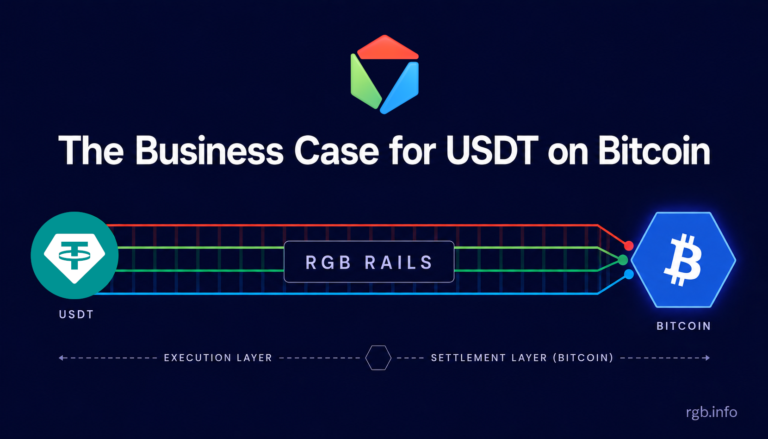
Asked about market demand, Tenga was direct about where it concentrated at the time: bitcoin, stablecoins, and gambling. Stablecoins, in particular, stood out as one of the main reasons builders were adopting RGB, and development work had focused on serving that purpose, because it was where demand was the highest.
But the reason stablecoins matter goes beyond payments alone:
“Stablecoins are interesting not only for the payment side, which for sure has already proven to have a significant demand, but also because once you have multiple assets on Bitcoin and on the Lightning Network, you can start building all these trading and atomic swap protocols, which will bring on Lightning not only stablecoin payments volume, but also trading volumes of people that are interested to trade Bitcoin against USDT or against other popular assets.”
In other words, stablecoin volume was only the first layer. Once bitcoin and stablecoins both circulate as RGB assets over Lightning, the same infrastructure opens the door to trading and atomic swaps between them, bringing payment and trading volume to Lightning.
RGB’s Compatibility with the Lightning Network
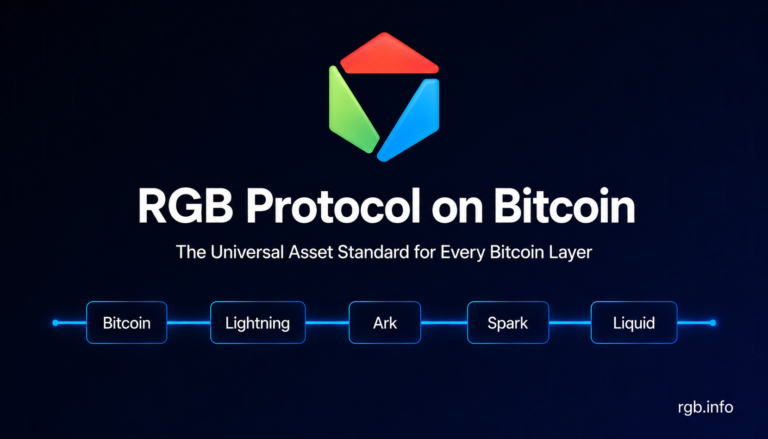
RGB was designed from the start to be compatible with the Lightning Network. The reasoning follows directly from Bitcoin itself: a token protocol built on Bitcoin needs to scale the same way Bitcoin scales, and Lightning remains the only production-ready, trust-minimized scaling solution available today.
“RGB was designed from the beginning with the goal in mind to be compatible with the Lightning Network, because the idea was to have a token protocol on top of Bitcoin with no trust trade-off, no compromises — no sidechain, no validator, none of this stuff, so the same trust assumption of Bitcoin. But we also want it to be scalable, and the way to scale RGB is the same way we scale Bitcoin. There are multiple proposals, but right now the only scalability solution that works in production, without trust assumption, is Lightning.”
This design goal became a working node: Tenga’s team at Bitfinex was developing the RGB Lightning Node, a Lightning node based on LDK that supports creating Lightning channels denominated in RGB assets instead of only in bitcoin.
Tenga described why it matters beyond RGB itself: not only for the scalability of the protocol, but also to bring more activity to Lightning, helping finance the whole Lightning ecosystem.
Federico Tenga on Real-World Assets and RGB
There was a lot of hype around real-world assets (RWAs) at the time, but Tenga was candid about the uncertainty:
“There is a lot of hype about real-world assets. It’s still unclear in which direction this industry will go, because it’s mostly dependent on the regulatory side rather than the technological side. RGB for sure is well positioned to serve these use cases, because a lot of people want to issue directly on Bitcoin and not to deal with other chains that introduce their own trade-offs and their own risks.”
Even so, RWAs weren’t where his own interest lay:
“For me, it’s not the most interesting use case, because those use cases will probably be assets that don’t move often, they don’t have so much velocity. So it’s not what is going to generate a lot of volume and a lot of revenues for the industry. RGB will serve those use cases for sure, but on my side, I think it’s more important to focus on the payment and the swap functionality for stablecoin and Bitcoin.”
Further Reading
- RGB v0.11.1 Is Live on Bitcoin Mainnet
- USDT on the Lightning Network: Why It’s Good for Lightning Itself
- Inside Utexo’s RGB Stack: SDKs, the Bridge, and a Live Wallet Demo
- RGB Protocol on Bitcoin: Bringing Stablecoins on Bitcoin and Lightning