RGB Lightning Is Now in Tether’s WDK
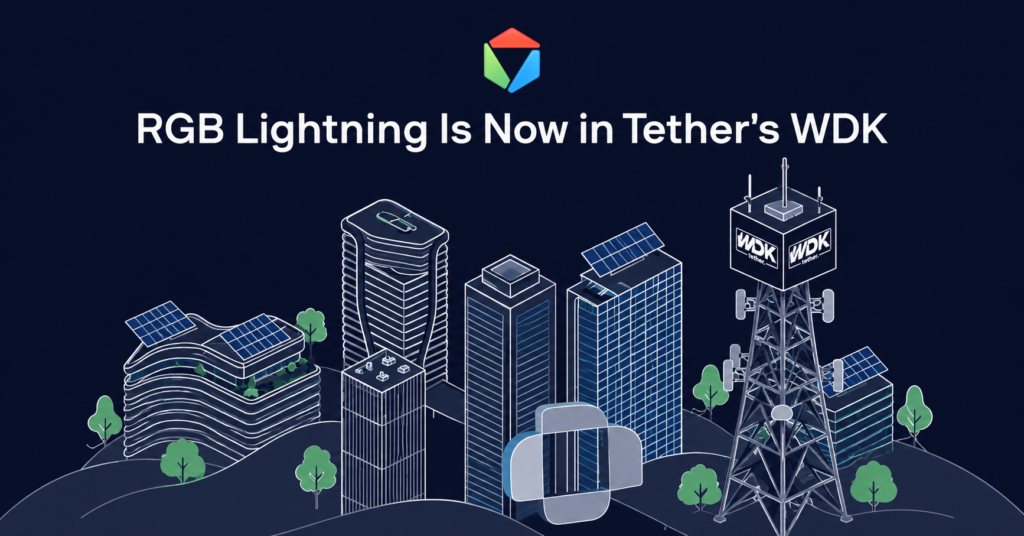
Tether’s Wallet Development Kit (WDK) now ships a Lightning module for RGB Protocol on Bitcoin assets, built by Utexo and announced from Tether’s own WDK account.
In Brief
- RGB Lightning Tether WDK support is now live: Utexo’s new module, announced from Tether’s own WDK account on X, lets any WDK wallet send and receive RGB assets over Lightning.
- It’s the second half of the picture: Utexo added on-chain RGB support to WDK in February 2026, and this module adds the Lightning side. A demo video shows it working between two test wallets, one on Android and one on iOS.
- The module is still in beta, maintained by Utexo.
What Was Announced
A new Lightning module for RGB assets is now part of Tether’s Wallet Development Kit (WDK). The official WDK account confirmed the RLN Community Module is now live. Thus, any WDK wallet can move RGB assets over Lightning without assembling the stack itself, completing the second half of RGB support inside WDK.
Tether’s WDK account also shared a demo video showing the module working end to end between two fresh WDK wallets on a test network, one on Android and one on iOS. The demo shows a Lightning Bitcoin payment sent from Android to iOS, followed by an RGB transfer.
For users, the demo hints at what a future USDT-on-Bitcoin wallet might look like: an interface as simple as two buttons, with everything else running invisibly underneath.
What Does Tether WDK Support Change?
Before this module, wallet developers who wanted their app to support both Lightning payments and RGB assets had to build that integration themselves. It was a big task, since it means making a Lightning node understand RGB assets on top of ordinary Bitcoin payments.
The new module, called wdk-rgb-lightning, takes care of that integration once, so every wallet built on WDK can skip building it from scratch.
Once a wallet adds the module, its users can:
- Send and receive Bitcoin over Lightning, instant and low-fee, just like any other Lightning wallet.
- Send and receive RGB assets over those same Lightning channels, instead of only on-chain.
- Open Lightning channels automatically, by connecting to a Lightning Service Provider, so new users can skip the extra step of setting up and funding a channel themselves.
- Pay a Lightning Address, a simple, email-like way to send Lightning payments without needing a separate invoice each time.
- Back up Lightning and RGB balances, so losing or replacing a phone doesn’t mean losing funds.
The wallet’s signing keys stay protected throughout: a dedicated signing component handles the sensitive parts of managing a Lightning channel, and the module itself never has direct access to the wallet’s private key. The module also comes in two versions under the hood, one for apps that run on a server or desktop, and one for mobile, so it works the same way across different types of wallets.
From On-Chain to Lightning: the Full Picture
The Lightning module is not Utexo’s first RGB integration in Tether’s WDK. In February 2026, Utexo added a first module that let WDK wallets issue RGB assets directly on the Bitcoin blockchain. New RGB assets are still created through that earlier module. The Lightning module simply moves assets that already exist, and does it faster.
Put together, the two modules give any WDK wallet the full picture: issue RGB assets on-chain, then move them at Lightning speed, without a wallet’s developers building either piece themselves.
What’s the Module’s Maturity?
The module is still an early beta. Its behavior, and some of its technical details, can still change before it reaches a stable release, as Utexo keeps building and maintaining it. Wallets adopting it today are testing and integrating ahead of a more mature release.
For anyone following the bigger picture, the module is a concrete step toward RGB transfers at Lightning-speed, including the ones expected to carry USDT on Bitcoin, becoming a built-in option for any wallet on WDK rather than something each wallet team has to build on its own.