RGB Protocol on Bitcoin: Bringing Stablecoins on Bitcoin and Lightning
This interview was recorded at the Tuscany Lightning Summit 2026 in Viareggio, Italy, where Matteo Branchetti talks about bringing stablecoins on Bitcoin, privacy, and where RGB Protocol on Bitcoin is heading next. He is Chief Product Officer (CPO) of Utexo, which is building a stablecoin ecosystem on Bitcoin and Lightning powered by RGB Protocol on Bitcoin.
In Brief
- Utexo is building a stablecoin ecosystem on Bitcoin, then Lightning, giving normal users and merchants a spendable asset instead of volatile Bitcoin.
- Matteo sees privacy as RGB’s biggest future use case, keeping on-chain payments and salaries from leaking data.
- Short-term priorities once USDT lands on RGB: interoperability across USDT/USDT0 chains, and distribution via exchanges and wallets.
- Utexo is also testing native Bitcoin yield over Lightning (4%–6%) and built an AML tool with Crystal Intelligence for regulated institutions.
What’s Your Role at Utexo?
I’m the Chief Product Officer (CPO) at Utexo. My main role is setting the product roadmap and priorities: USDT is coming to RGB Protocol on Bitcoin, arriving to Bitcoin and Lightning through RGB, so what’s next? Where do we see RGB and USDT stablecoins fitting on Bitcoin? And what are the actual use cases for stablecoins on Bitcoin?
Product strategy around those questions is mostly what I do.
What Is Utexo’s Value Proposition?
Utexo’s main value proposition is to create a stablecoin ecosystem on Bitcoin first, and then push it through Lightning.
The idea is simple: on the Bitcoin side, Bitcoin has lacked real use cases over the years, because it has been the only asset on the chain.
On the Lightning side, Lightning is probably the best layer for payments, but people and merchants don’t want to accept or spend Bitcoin itself, since it’s too volatile for everyday spending. Thus, you need a spendable asset that normal users can actually use day to day.
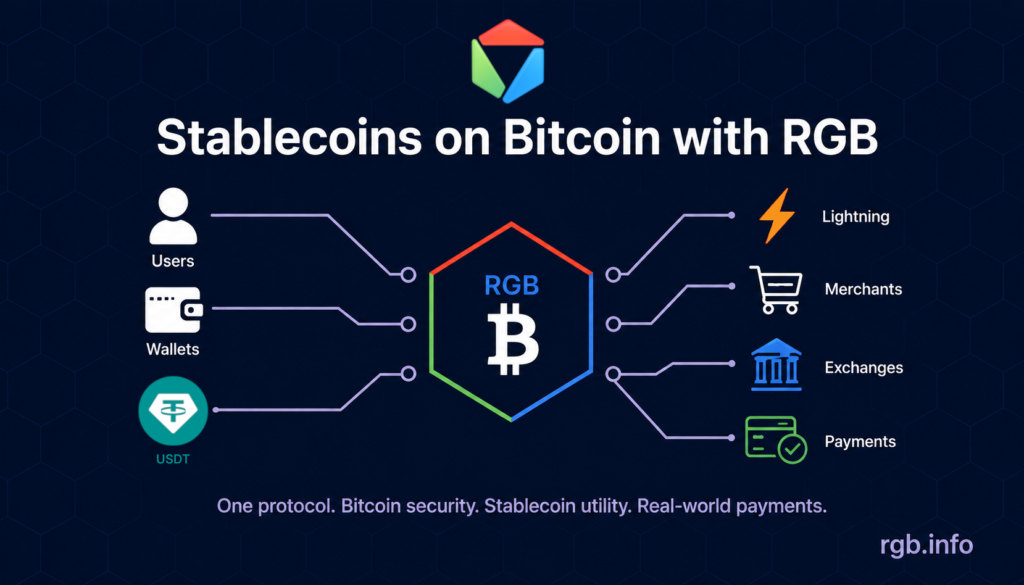
Utexo’s value proposition combines both sides: bringing stablecoins to Bitcoin and Lightning to enable payments, and to unlock Bitcoin-backed loans natively on-chain, without using any bridge. We’re creating a stablecoin ecosystem in a network that has never had one, and arguably, we’re creating the best network there is.
Where Do You See RGB’s Biggest Use Case in the Future?
If you look at where the market is going, over the last several years everything has been about broadcasting everything on-chain. Now, with real use cases like payments, like salaries being processed on-chain, the main risk is that all that data leaks on-chain.
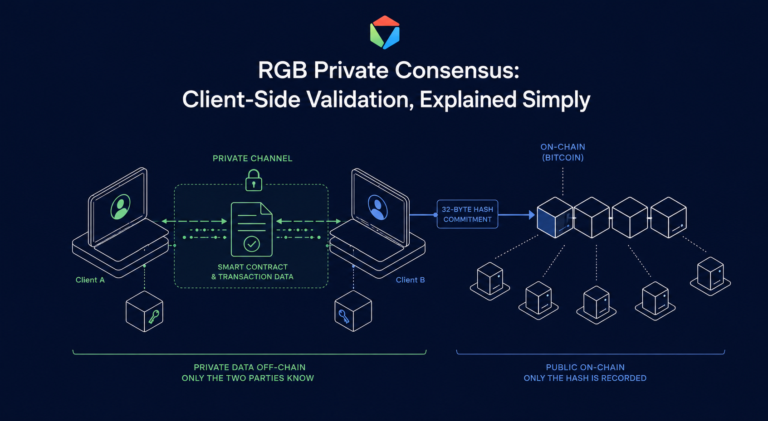
RGB’s privacy features and client-side validation can be used to preserve the privacy we should all care about, and that we should all use. Regarding payment use cases over Lightning or Bitcoin Layer 1, when combined with the privacy features emerging across other ecosystems, I think privacy will be RGB’s main use case going forward. Privacy is what unlocks real-world use of crypto: stablecoins, payments, and so on.
Once USDT Lands on RGB, What Are Your Short-Term Goals?
Going forward, I’d say that our traction comes down to two things: interoperability and distribution.
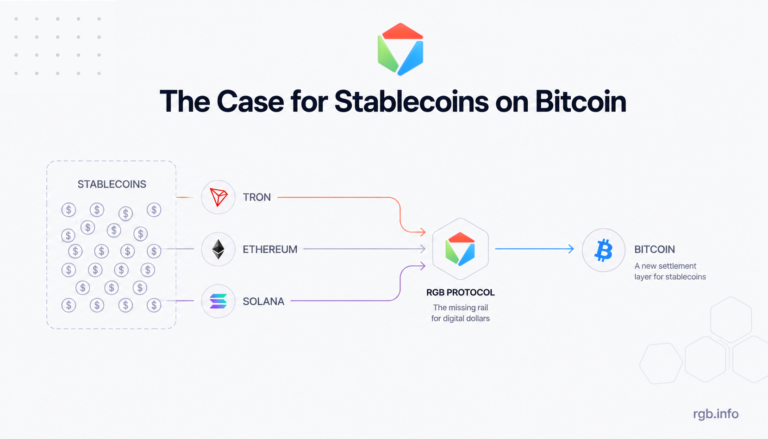
On interoperability: what we’re trying to build at Utexo is something genuinely interconnected across all USDT and USDT0-based chains. What we want is entry points into the chain. Surely, I can issue USDT tomorrow, but if it isn’t connected to anything, how do those assets actually enter the chain? We don’t want a siloed ecosystem. We want something interconnected with USDT on Tron, which holds around half of all USDT in circulation, USDT on Ethereum, USDT0 on Plasma, and so on. What we’ve built connects USDT across all these chains, and it lets USDT move from Ethereum, to Bitcoin, to Lightning.
On distribution: our main partners will be exchanges. We’re integrating and listing on major exchanges outside Europe right now, and wallets too. Once those two pieces are in place, we can move into payment providers for processing payments over Lightning, OTC providers, market makers, trading, and so on. But those two pieces need to come first.
Is There Anything Else About Utexo’s Roadmap You’d Like to Share?
I’d say there are a couple more things.
One is that what we’re building also enables Bitcoin staking over Lightning. In our tests, we’ve shown that Bitcoin over Lightning can generate between 4% and 6% in yield (ndr updated percentages), and it’s native Bitcoin yield, not some other chain’s token. For institutional clients, being able to get Bitcoin yield directly on Bitcoin, without taking on major Layer 2 risk, is a huge use case.
The other thing: we spend a lot of time talking to exchanges and payment providers, and every one of them is a regulated entity. Their concern when they hear about privacy is usually the same. They like privacy, but their compliance team needs to approve it first. Thus, we built a system with Crystal Intelligence, an AML tool that maps what’s happening on-chain and gives an AML risk score to the user (whether that user is an exchange, a payment provider, a regulator, or an institution) to flag whether any money-laundering activity is reaching the chain, so the team involved can act on it. It’s a tool that lets institutions and regulated entities use privacy features and get into Bitcoin too.
Further Reading
- USDT on Bitcoin: Utexo and RGB Lightning: rgb.info/usdt-on-bitcoin-utexo-rgb-lightning/
- Bitcoin Magazine on RGB, USDT, and Utexo: rgb.info/bitcoin-magazine-rgb-protocol-usdt-utexo/
- Utexo’s RGB Lightning infrastructure: rgb.info/thunderstack-utexo-rgb-lightning-infrastructure/