Lightning Network

  • |

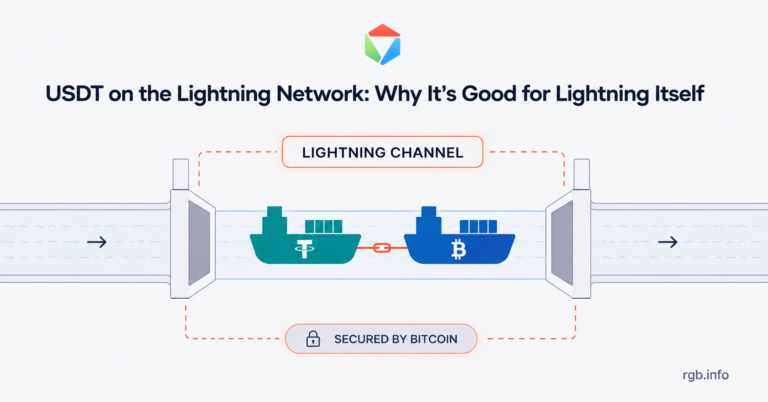
    USDT on the Lightning Network: Why It’s Good for Lightning Itself

    USDT on the Lightning Network is the next step for RGB Protocol on Bitcoin’s stablecoin infrastructure. Utexo is building the pieces that will make it work end to end: RGB Lightning Nodes, a wallet development kit, and a cross-chain bridge. In Brief How Does RGB Work on the Lightning Network? A normal Lightning channel moves…

  • RGB Protocol on Bitcoin: Bringing Stablecoins on Bitcoin and Lightning

    This interview was recorded at the Tuscany Lightning Summit 2026 in Viareggio, Italy, where Matteo Branchetti talks about bringing stablecoins on Bitcoin, privacy, and where RGB Protocol on Bitcoin is heading next. He is Chief Product Officer (CPO) of Utexo, which is building a stablecoin ecosystem on Bitcoin and Lightning powered by RGB Protocol on…

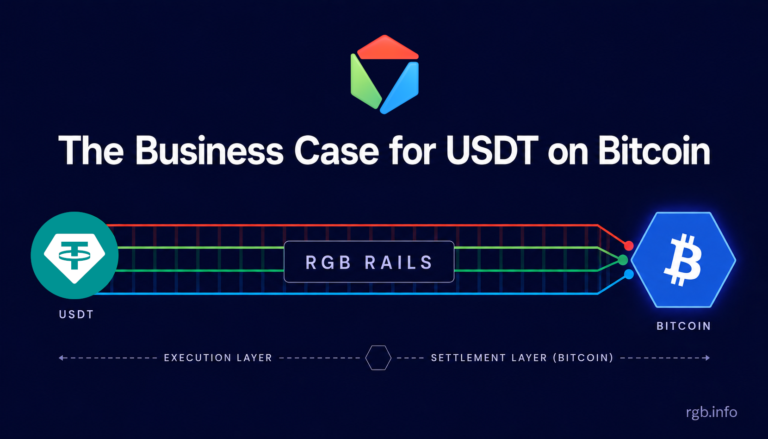
  • The Business Case for USDT on Bitcoin: Utexo’s Bet on RGB and Lightning

    This article is based on Viktor Ihnatiuk’s talk at the Tuscany Lightning Summit 2026, Viareggio, Italy, May 12-13, 2026. He is one of the co-founders and CEO of Utexo. USDT on Bitcoin is the bet behind Utexo. Viktor Ihnatiuk’s talk at the Tuscany Lightning Summit 2026 laid out why he thinks it will work. Utexo’s…

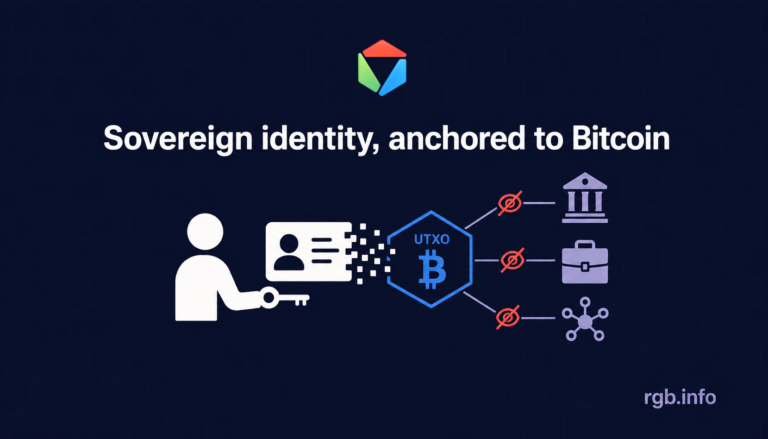
  • Michael Chobanian: RGB and Self-Sovereignty

    This interview was recorded at the Tuscany Lightning Summit 2026 in Viareggio, Italy, where Michael Chobanian talks about Bitcoin, RGB, and what sovereign identity means to him. He is the former president of the Blockchain Association of Ukraine, and a co-founder and board member of the RGB Protocol Association. In Brief Why did you decide…

  • |

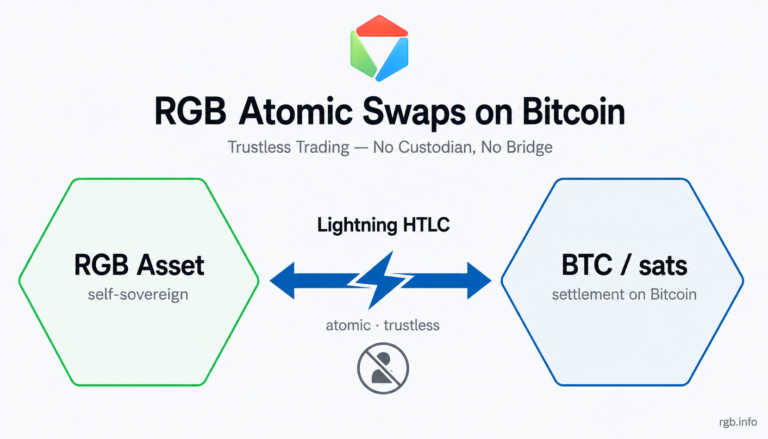
    Trustless Trading on Bitcoin: RGB Assets and Atomic Swaps

    This article is based on Walter Maffione’s talk and live demo at the Tuscany Lightning Summit 2026, held in Viareggio in May 2026. Walter is the lead developer of KaleidoSwap. RGB atomic swaps on Bitcoin are the technical foundation behind trustless digital asset trading: no custodian, no bridge, settlement directly on Bitcoin. KaleidoSwap is the…

  • RGB on Lightning: What’s Coming Next

    This article is based on Zoe Fatilbà’s talk on the RGB Lightning roadmap at the Tuscany Lightning Summit 2026, Viareggio, Italy, May 12–13, 2026. Key takeaways: How Does RGB Protocol Work on the Lightning Network? RGB Protocol on Bitcoin works through client-side validation: asset data never touches the chain, and only the parties involved in…

  • Lightning Network as the Common Language of Bitcoin Layers

    This article is based on the panel “Lightning as the Common Language of Bitcoin” from Plan B Forum 2025, moderated by Giacomo Zucco, with Kilian Rauch (Boltz), Federico Tenga (Bitfinex / RGB Protocol Association), Marco Argentieri (ArcLabs), and Roy Sheinfeld (Breeze). At Plan ₿ Forum 2025 in October, a panel moderated by Giacomo Zucco asked…

  • |

    RGB as The Universal Asset Standard for Every Bitcoin Layer

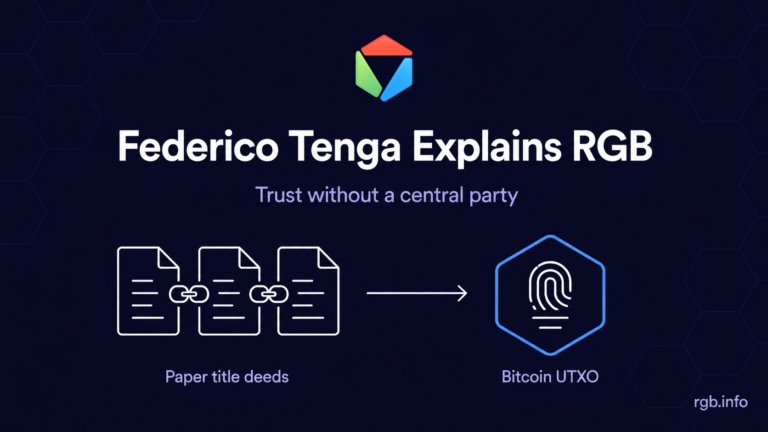
    Based on the talk “RGB as a Multi-L2 Standard” by Federico Tenga at the Tuscany Lightning Summit 2026, Viareggio, Italy, May 12–13, 2026. In Brief Bitcoin Is Building a Multi-Layer Ecosystem. RGB Protocol on Bitcoin is the universal asset standard for Bitcoin’s multi-layer ecosystem: a protocol that allows digital assets issued on Bitcoin to move…

  • The History of RGB Protocol on Bitcoin

    The idea: Bitcoin as more than money Bitcoin was designed to do one thing extremely well: transfer value between parties without trusting a third party. But from the early days of the ecosystem, developers began asking a broader question: could Bitcoin’s security and decentralization be used to represent any kind of digital asset, not just…

  • |

    What is RGB Protocol on Bitcoin? A complete guide

    Disclaimer: for education purposes some of the concepts described in this article have been simplified, and to avoid overwhelming the reader with new terms also the terminology may differ from technical specifications. There is a growing interest in the issuance of digital assets on top of Bitcoin and Lightning Network, but most approaches required compromises…